Non sans une certaine perversité, le Wall Street Journal pose une question intempestive, qui redonne une actualité inattendue à un débat que les professionnels pensaient un peu vite déjà tranché...
War of Watches Looms In Neutral Territory
Rolex, Swatch and Rivals Battle Over How Swiss a ‘Swiss-Made‘ Timepiece Should Be
ZURICH -- Swiss watches need to be more Swiss. That is the call of some of the biggest makers of one of the country‘s best-known luxury exports.
Worried that too large a proportion of a Swiss watch is, in fact, made outside Switzerland, big manufacturers such as Swatch Group SA, Cie. Financière Richemont SA, which owns the Piaget brand, and family-owned Rolex SA want to tighten the requirements for what qualifies as Swiss-made.
But some smaller companies see this as an attempt to force them out of business and say protecting the Swiss-made name would be better achieved by boosting quality standards.
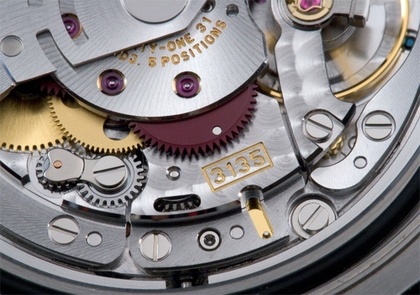
Under current laws, at least 50% of the value of a watch movement -- the watch‘s engine, comprising key parts such as the winding and setting mechanisms -- must be manufactured in Switzerland for the product to qualify as Swiss-made. But since a movement typically makes up only 15% to 25% of a watch‘s total value, this means less than 10% of the value of a watch qualifying as Swiss-made might have been added in Switzerland.
Today, it‘s legal to sell a watch as Swiss-made simply by doing some extra work on a small component in Switzerland, said Nick Hayek, chief executive of Swatch Group, the world‘s largest watchmaker by sales. It‘s like putting expensive Swiss seats in a generic car and then selling it as Swiss-made.
Some competitors, for instance, meet requirements by decorating the rotor -- a half-disk rotating inside the watch case, driven by the wearer‘s movements -- in Switzerland, while buying most other parts elsewhere, Mr. Hayek said.
The industry is lobbying for a new standard, demanding that at least 60% of a watch‘s value be created in Switzerland. It wants a hurdle of 80% for mechanical watches -- sophisticated and sometimes tailor-made items with additional functions that can take months to complete -- which sometimes sell for as much as 1 million Swiss francs ($910,000) apiece.
Swatch, best known for its Omega brand, is the driving force behind the initiative, alongside Richemont and Rolex. The three dominate the Federation of the Swiss Watch Industry, a powerful industry association representing most of the country‘s manufacturers, which is lobbying the government for the change.
But not all watchmakers support the move. Some smaller companies fear tougher regulations would drive them out of business. If the changes were to go through, companies like ours may have to move production abroad, said Ronnie Bernheim, co-owner of Zurich-based Mondaine Watch Ltd., which produces about one million watches a year with a Swiss work force of about 100.
Mondaine said the proposed regulatory change, which would have to be passed into law by the federal parliament, serves the interests of the large Swiss luxury-watch producers with strong global brands, while smaller manufacturers, whose products are more dependent on a low price, would suffer. For example, Mondaine‘s so-called Swiss Railways Watch would have to sell for around 300 Swiss francs if the content requirements changed, double its current price, Mr. Bernheim said.
The new content rules might even hurt Swiss quality, he noted, because some producers would resort to cheaper foreign-made parts, thereby raising the relative value of the Swiss-produced components.
Rather than tightening regulation, Switzerland‘s watch industry should be more preoccupied with quality, he said. Why not, for instance, agree that every Swiss-produced watch should be water-resistant and superaccurate?
Mr. Hayek at Swatch Group disagrees that a requirement for a more substantial Swiss component would lead to higher prices. More business for local component makers would generate economies of scale that would bring prices down, he said.
The success of Swatch, a basic watch mass-produced in Switzerland, is an example of how prices can be kept low even in a high-price country, he said.
The ‘Swiss-made‘ label is extremely valuable. But there‘s a risk it will be watered down if things continue the way they are now, Mr. Hayek said.
Erich Mosset, chief executive of Ronda AG, a Swiss producer of quartz movements, is another opponent of the proposed change. He said independent companies such as his could be squeezed out of the market.
Our 700 Swiss jobs -- about a third of our total work force -- could be affected very fast, as customers adjusted their production, he said.
Many financial analysts say the regulatory push is a legitimate way of protecting Switzerland‘s watchmaking industry, even though it is a threat to some companies.
Those who oppose the measures are usually low-end producers which, to a large extent, buy parts abroad and sell the end product as Swiss-made, which I don‘t think is right, said Zürcher Kantonalbank analyst Patrik Schwendimann.
There are, however, concerns that Swatch Group and other big Swiss makers may become even more powerful under the new regime.
According to a study by UBS AG, the proposed changes may generate additional business worth some 650 million Swiss francs a year for Swatch Group, already the principal supplier of watch parts to most of Switzerland‘s watchmakers. Under the new regime, many Swiss producers would cut down on watch parts imported from Asia and use more Swatch Group-made items, the study said.
Given the heft of the watch industry in Switzerland -- Swiss watch exports from January to July rose 5.3% from the year-ago period to 9.9 billion Swiss francs, accounting for 8% of all Swiss goods exports -- the new minimum requirement of 60% is likely to be approved, experts say.
The watch industry‘s aim to raise the bar to 60% is entirely in line with the cabinet‘s plan to tighten Swiss proof-of-origin laws, said Felix Addor, deputy director of Switzerland‘s Federal Institute of Intellectual Property. An 80% requirement on mechanical watches, however, would violate trade agreements between Switzerland and the European Union, he said.
Martin Gelnar
Marques