Since the watchmaking revival just a few short years ago, we've seen an explosion of new and would-be watchmaking brands come onto the market. Many felt that as a me-too start-up in such a buoyant market they could jump on the bandwagon... (en anglais dans le texte)
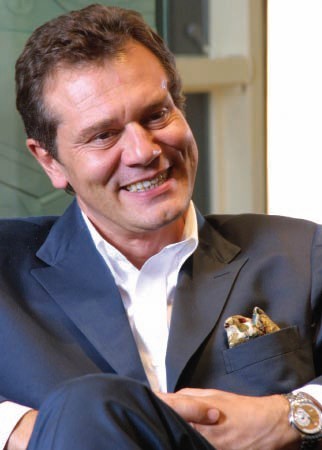
There is no substitute for genuine experience and expertise and, as these new brands force to bursting the oversubscribed luxury watches and jewellery niche, the genuine masters of time continue to create evermore mindboggling complications – complications that even the early master watchmakers would be in awe of.I spoke to François-Paul Journe, master watchmaker extraordinaire, to learn the secrets of his success.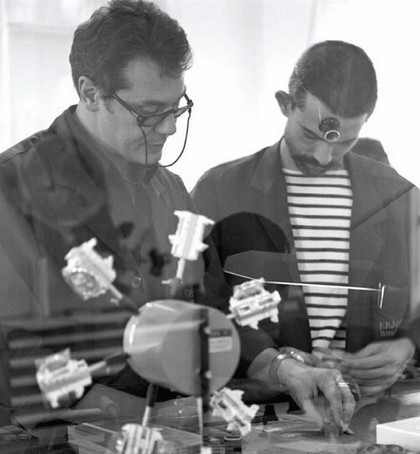
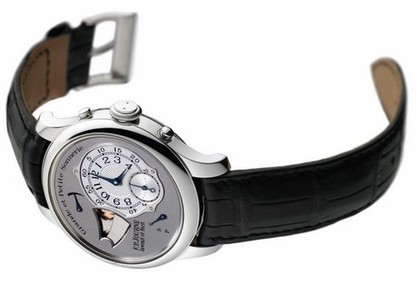
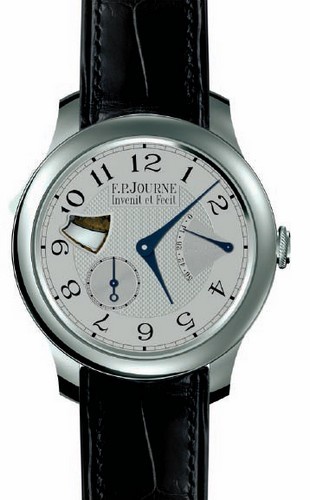
 Taking the spirit of what existed before and using it to respond to modern needs fascinates Journe. “Take the chronometer à resonance made by Janvier and the Breguets, which were unfortunately stolen from the Geneva Museum,” concludes Journe. “Well I wanted to make a resonance wristwatch in the spirit of the original resonance pocket watch. I adapted the concept using modern techniques to create a totally new and unique system.”It was of this that George Daniels (creative genius and inventor of the coaxial escapement), on seeing the piece for the first time said, “François-Paul, you really have courage – to create a watch such as this really takes time and commitment.” Proof of François-Paul Journe's mastery of his metier – if ever proof were needed!by Ita Mc Cobb
source: Swiss Style - mai 08
François-Paul Journe, master watchmaker extraordinaire
The early years
His passion, courage and commitment to watchmaking was obvious at a very early age. “I started my career by studying the history of early watches,” says François-Paul Journe. “I read everything I could lay my hands on related to the subject and visited all the museums. I worked as a watch repairer in my uncle's workshops in Paris, working 50% of my time restoring watches and the remainder creating my own watches. At that time restoring watches probably gave me the most satisfaction.”He stopped repairing watches when he was 20 years of age. He had met the curator of the famous British Royal Jewellery Collection on one of his visits to Paris. “He showed me pieces from the Royal Watch Collection, including an important Breguet and a George Daniels,” says Journe. “You can imagine the effect it had on me – I just lived for watchmaking and here I was seeing and handling these impressive pieces of watchmaking history! This gave me the incentive to start making my own watches full time.”Today, there are many people who believe they can create their own watches even though, unlike Journe, they've not the slightest idea how to take apart a Breguet watch and they've never even seen (or heard of) an Arnold, or a Tompion or a Berthoud chronometer. By the age of 18 Journe had already taken these pieces apart and restored them.“I'd been totally immersed in watches,” says Journe. “I'd, as it were, been bathed in a sea of watches. In fact you could give me an unmarked watch and I could tell you who had made it, just from my experience and understanding of each individual watchmaker and the quality of his work, and know their chronometry exactly – the science of their work – because at their time watchmaking was a purely scientific art.”The science of time
Much has changed today, particularly with the growth in the market for watches worn as jewellery, but Journe continues to concentrate on the scientific roots of watchmaking when creating his watches. Having said that, he does concede that today, if you need absolute precision you use an electronic watch.“In the 18th century,” adds Journe, “if you made a watch it was for its scientific precision. There is no longer a scientific justification for a watch. But, you still can make a watch as a scientific instrument – it's for you to choose, to decide.”“The grande sonnerie is the watch of the serious enthusiast – it's not a watch you can use without understanding how a technical watch works.” François-Paul Journe
Of all the pieces he has created his favourite is the grande sonnerie. “It is of course the most difficult to make and is consequently the piece which brings the most satisfaction. The Grande Sonnerie is the watch of the serious enthusiast – it's not a watch you can use without understanding how a technical watch works.”It is well known that grande sonneries are so technically complex that they break easily, which is why they are the most difficult watches to make. When Journe made his Grande Sonnerie he lodged ten patents for his inventions that enable the watch to be used without risk of breaking. Interestingly, the man who wears Journe's latest already has taken delivery of eight Journe grande sonneries without needing to return for repairs!To wear or not to wear
Journe creates his watches to suit a certain style of individual. He creates his masterpiece complications – such as the Grande Sonnerie, the Chonometre Souverain, the Resonance, the Tourbillon Inégalité with Remontoir d'Egalité, and his chronographs chronometers – for the real watch connoisseurs – and for those who prefer an automatic watch he has created his comfort automatics that rewind quickly and precisely and have a power reserve sufficiently long to last from Friday to the following Tuesday. The ultra slim FP Journe Minute Repeater
Given this choice, it never ceases to surprise me the number of serious collectors who regularly wear their very complicated masterpieces watches casually on their wrist. “My watches are made for that,” laughs Journe. “There are those who always wear the watches they buy and those that don't.” Although, he admits, he doesn't have a quantium perpetual in his collections – because, he believes, those that own one do so just to fiddle with it! “If you want a quantium perpetual you really are not someone who needs to know the time,” he smiles.The Sympathetic
The influences on Journe's work hark back to the masters of early watchmaking – Breguet who, in his time, revolutionized the world of watchmaking – Le Roy and Berthoud who revolutionized the marine chronometer, and Emery, as they say, “No one can make an escapement like Emery”.“For me,” says Journe, “they offer more of a philosophical vision than a source of technique. Evidently there is no satisfaction for me in copying their work, but I do try to follow the spirit behind their work. I try to create the most effective systems using the minimum of elements and to find solutions and form that are most pleasing while following the route of their wisdom and philosophy.”The first time Journe made a sympathetic clock for John Asprey he found that Breguet had had the same idea hundreds of years before. Inevitably Journe's clock is different since the demands of the 21st century are not at all the same as those of the 18th century.A sympathetic clock is a clock that regulates and sets the time of a watch placed in a special recess in the clock. The sympathetic clock is a pendulum clock – more a marine chronometer for the office – during Breuguet's time it would be rewound each day. The watch, a pocket watch, would also be rewound each day – the pendulum clock would regulate the pocket watch, setting its time in line with that of the clock.“Obviously, watches today are not regulated in the same way as they were during Breguet's time,” says Journe. “For instance you no longer rewind a clock every day, so I made a clock that needed to be rewound just once every eight days. Also, previously, you could not adjust the watch yourself – it was the clock that adjusted the watch. So, although I created my sympathetic clock in the same spirit as Breguet's, I did so in a totally different manner, using materials in a totally different way responding to today's demands.”Taking the spirit of what existed before and using it to respond to modern needs fascinates Journe. “Take the chronometer à resonance made by Janvier and the Breguets, which were unfortunately stolen from the Geneva Museum,” concludes Journe. “Well I wanted to make a resonance wristwatch in the spirit of the original resonance pocket watch. I adapted the concept using modern techniques to create a totally new and unique system.”It was of this that George Daniels (creative genius and inventor of the coaxial escapement), on seeing the piece for the first time said, “François-Paul, you really have courage – to create a watch such as this really takes time and commitment.” Proof of François-Paul Journe's mastery of his metier – if ever proof were needed!by Ita Mc Cobbsource: Swiss Style - mai 08
Marque