
Une visite rapide par l'image au nouveau musée Tag Heuer de La Chaux-de-Fonds, conçu dans une logique 360 degrés. Par les images et par les montres, on peut s'y immerger dans la trajectoire de la marque au cours du dernier siècle et demi. 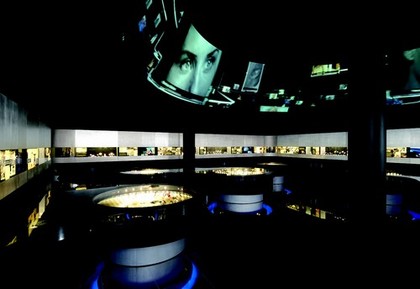
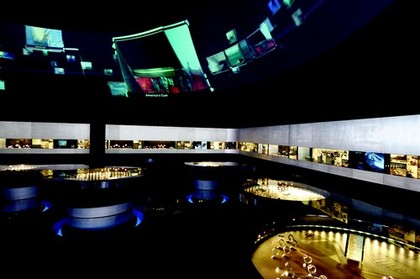
 Le communiqué officiel (exclusivement en anglais, pour l'instant) TAG Heuer introduces the first avant-garde 360 degree watchmaking museum, embodying 150 years of unique heritage displayed to catch the imagination, and envision and build the next 150 years. It reflects the innovation, precision, performance and prestigious sports embedded in our DNA.
What differentiates one brand from another? Why does the TAG Heuer range currently encompass lines such as the TAG Heuer Formula 1, Monaco, Carrera, the SLR Chronograph or the Grand Carrera? Why is TAG Heuer the only watch brand to offer instruments that are accurate to 1/10th, 1/100th and 1/1000th of a second for wristwatches, and to 1/10,000th of a second for timekeeping? The answer is simple: it is all a matter of DNA, just like human beings. The unique combination that makes each person different from another and implies that right from birth we are endowed with certain characteristics inherited from our parents and from their combined DNA. The same is true of brands. TAG Heuer carries within it the visionary genes of its founders Edouard Heuer and his sons Jules-Edouard and Charles-Auguste: entrepreneurship, innovation, an obsession with ultimate precision, and a deep love of prestigious sports. From the oscillating pinion to the Mikrograph, the world's first mechanical stopwatch accurate to 1/100th of a second, the foundations on which TAG Heuer has built its strength today were in place very early on. Ever since then - and without a doubt this is one of the brand's great assets - men such as Charles-Edouard, Hubert and Jack Heuer, and more recently the contemporary management teams, have had the wisdom to build the brand's strength around these central characteristics, to keep the focus of their efforts, on both product development and communication, within the framework established by our founding fathers. Our DNA is unique; it was created in the late 19th century and continues to drive a substantial proportion of our development in the early 21st century: The Calibre 360 launched in 2006 perpetuates the obsession with precision that resulted in the Mikrograph in 1916; while the TAG Heuer Formula 1 embodies the ultimate blend of prestige and performance, sport and glamour as the Olympic Games and greyhound races did in the 1920s. I am very proud and honored to welcome you today to our new TAG Heuer 360 museum, which celebrates the exceptional TAG Heuer DNA, the unique sports heritage and constant daring quest for technical innovation and precision. Like our timepieces it seeks to be innovative and this museum has been designed to house the first ever 360 degree conic movie screen in the world. Managed by a battery of 12 computers processing over 1 million images an hour, it creates a dynamic presentation of the unique TAG Heuer watchmaking saga that has lasted almost a century and a half. Last but not least, this museum is located in the TAG Heuer avant-garde eco-headquarters, with its energy-saving architecture that allows external and natural light to flow seamlessly throughout the building from the entrance to the roof via the elevator tubes and the office windows. Let me invite you to join me on a journey that will take you from an unrivalled heritage into an exciting future where everything is possible
Jack Heuer Jean-Christophe BABIN
Honorary Chairman TAG Heuer President & CEO 
Jean-Christophe Babin
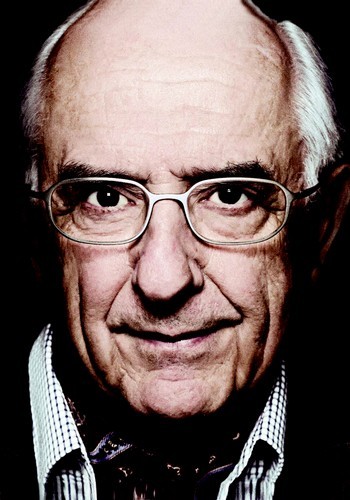
Jack Heuer
ARCHITECTURAL ALCHEMY
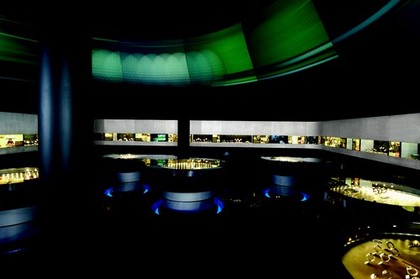
TAG Heuer 360 is the first museum dedicated to the unique collection of precision timepieces in the 150 year history of the brand. TAG Heuer, renowned for “firsts” throughout its history, has located this privileged project on the ground floor of the company's new headquarters in La Chaux-de-Fonds, Switzerland. The Museum was conceived and realized by Eric Carlson and his Paris-based architecture studio CARBONDALE, in collaboration with “dUCKS Scéno”, a specialist in scenography and museography, and the in-house TAG Heuer team. This remarkable design was inspired by the intriguingly inaccessible space between the dial and the crystal glass, where the hands of time are turned by an inexplicable force from within. This spatial layer, steeped in both mystery and science, is architecturally articulated by the 3 major elements that together define the singular 200 square meter Museum. THE CRYSTAL GLASS The first element, symbolizing the crystal that crowns a watch, is a monumental circular video screen suspended overhead and beveled to provide a clear view to the visitors below. This dramatic panoramic screen is composed of 12 high performance retro-projectors, synchronized into a single moving 360° centripetal image. The film projected by the circular screen emphasizes the legends and ambassadors that contributed to the evolution of the brand. The ultra-sound speakers directionally shower down a beam of sound audible only to those positioned directly below, intensifying the sensorial experience. THE TIME LINE The second element defines the periphery of the museum and acts as an architectural Time Line. A 50 meter long band of brushed aluminum inlayed with a flush glass ribbon circumscribes the four walls. Behind the eye-level glass ribbon a contiguous composition of 16 display cases, 8 video screens, 51 back-lit images and text incrementally mark the passage of time. Starting from the entrance and moving in a clockwise direction, key moments in the history of timekeeping are highlighted with numerous astonishing treasures that chronicle the story of TAG Heuer up to the present day. THE DIAL The third and most striking component of the exhibition space is analogous to the dial. Rather than employing the typical design solution of distributing individual display cases throughout the space, CARBONDALE envisioned an innovative architectural approach. A single seamless horizontal plane of polished black Corian slicks powerfully across the space, like motor oil, filling it to a depth/height/width of 1 meter. An organically carved path navigates through this richly reflective surface to reveal the 9 horizontal circular displays as “sub-dials” to the watch face. The horizontal displays contain an extraordinary collection of timepieces based on the 9 themes of the collections: Great Inventions, From Pocket to Wrist, Modern Times, The Dream of Flight, Legendary Tracks and Races, Famous Partners, The Call of the Sea, Technology + Function = Design, Watches for Women. In keeping with the avant-garde tradition of TAG Heuer, each circular display made of rose wood and brushed aluminum is hydraulically equipped to lift and lower the islands of watches in silent perfection. As a final touch, 50 large magnifying lenses of varying sizes and resembling giant water drops on the body of a car have been placed in an irregular pattern over the vast horizontal surface. Each clear glass lens is strategically positioned above key timepieces to enlarge the infinitesimal details renowned in Swiss watchmaking. The spatial and visual complexities of this custom tripartite design, combined with the great care given to the detailing and construction of high-tech materials make the TAG Heuer 360 Museum uniquely luxurious. The multiple dualities that are the essence of the brand - Precision & Beauty, Strength & Elegance, Innovation & Tradition and lastly Mystery & Science - are all architecturally assembled and crystallized here and express the fascinating alchemy of TAG Heuer.
A 360° SCENOGRAPHIC CONCEPT
Designed and produced by dUCKS Scéno, in cooperation with the architectural firm of CARBONDALE and TAG Heuer, the TAG Heuer 360 Museum's scenography forms a vast PANORAMA, reinterpreted in an avant-garde way. Visitors, standing in the centre of the museum, contemplate the history of TAG Heuer unfolding around them. This unique venue provides both an overall vision and detailed views. It allows visitors to examine the collections and let themselves be carried away by legendary characters, stroll through the whole of the company's history, discover the objects that are emblematic of timekeeping, and lastly step from the timelessness of the legend into the now of the sporting event. Visitors are able to browse three levels of interpretation: Legends, History and Collections. The legends are projected onto a giant conical screen suspended above the ground, History is written on a 50 meter strip of light that winds around the museum space, Collections are revealed in 9 circular flat glass display cases. LEGENDS
The upper level belongs to the legendary and the epic, to the forerunners of the brand, the men and women who made it what it is, who founded it. Here the Formula 1 racing car of Ayrton Senna or the golf ball of Tiger Woods are imagined spinning around the visitor on a giant screen 7.5 meters in diameter. Through the succession and movement of the images, this machine separates the seconds, the minutes… It gives body and feeling to the control of the measurement of time. HISTORY
The middle level (vision panel) is educational; it traces the history of the TAG Heuer brand in the form of a backlit graphic time strip that unfolds across every wall of the museum. The history of the brand is described using three cross-cutting themes: chronographs, the quest for ultra-precision, stopwatches for sporting events.
Chronographs, key dates, texts, quotations, illustrations are presented, as are period documents, collector's items and films. The objects are put in context thanks to period documents, static images and videos. Our aim has been to create an emotional reaction by the relevant association, by the authenticity of the objects and documentation. The 8 films projected onto the strip, which link images with themes, are the guide to the exhibition, the thread connecting the panoramic film, the history narrated and the collections in the flat display cases; they punctuate the story with different rhythms. COLLECTION
The lower level houses the TAG Heuer Collection: chronographs and watches, single or multiple pieces, technical or mythical pieces, useful or glamorous pieces, classified and itemised thematically in the convolutions and flow of the 9 cases.
HISTORICAL TIMELINE
1860-1892
From one world to another… In 1860, at the age of 20, Edouard Heuer founded a watchmaker's workshop in Saint-Imier in the remote Jura Mountains of Switzerland. It was the start of an extraordinary watchmaking story. 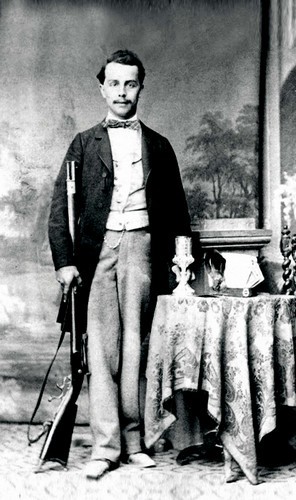
Edouard Heuer
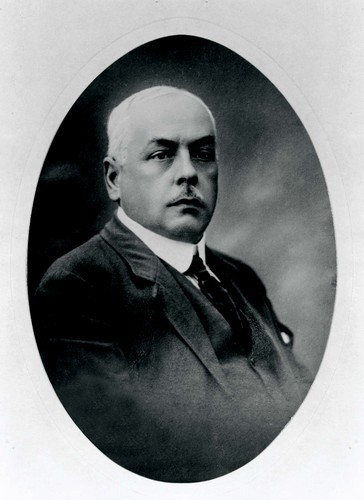
Charles-Auguste Heuer
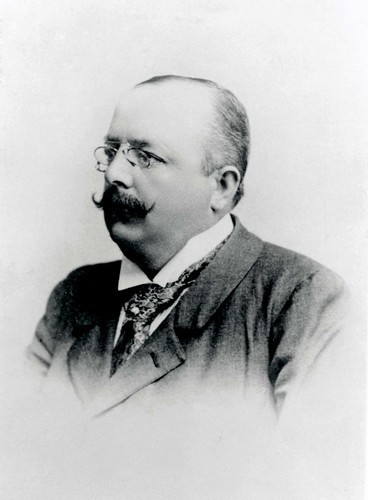
Jules-Edouard Heuer
THROWING AWAY THE KEY…
Back then, all watches were wound with a key. In 1866, the year Edouard Heuer relocated his workshop to Bienne, he changed the course of watchmaking history forever with his first patented invention: a keyless, crown-operated winding system. A huge success at the Universal Exhibition in Vienna, this new generation of timepieces was soon among the most coveted in the world. When powerful American manufacturers moved aggressively into the European market, Edouard Heuer responded by pushing through innovations in every area of design, engineering and manufacturing, thus helping to make the Swiss watchmaking industry the world leader that it remains till this day. 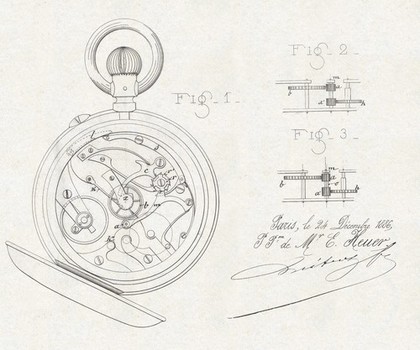
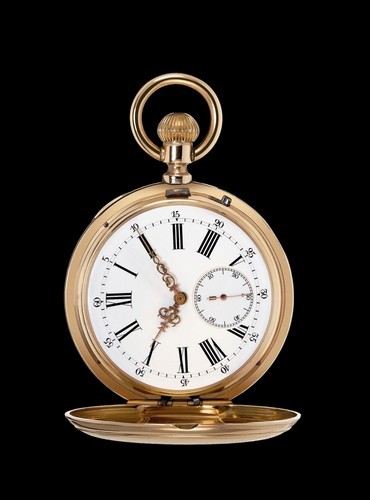 …AND BANKING ON THE FUTURE
Sporting competition was expanding rapidly on water, grass, cinder running tracks and roads. Measuring time accurately became increasingly important. Edouard Heuer was well aware of the opportunities and, in 1882, became one of the first to produce pocket chronographs in large quantities. In 1886, TAG Heuer (originally named Heuer after its founder) patented one of the most important innovations in watchmaking: the famous oscillating pinion, used to this day by leading manufacturers in the production of mechanical chronographs. With this breakthrough invention, TAG Heuer became the reference standard in chronographs and timing instruments for high-level sports. In 1889, at the Universal Exhibition in Paris, TAG Heuer was awarded a silver medal for his pocket chronograph collection. By the time of Edouard Heuer's death in 1892, TAG Heuer's creative vision and passion for innovation had laid the foundation for a watchmaking dynasty one that was to make an indelible mark on the next century of dramatic change.
1893-1950
TAG Heuer: Part of history at its fastest
Jules-Edouard and Charles-Auguste Heuer succeeded their father, whose daring and intuition had enabled TAG Heuer to dominate high-quality sports timing and chronographs. After stays in London, the two brothers were convinced that the company's future would unfold outside Switzerland. During a trip in to London, Jules-Edouard wrote to his mother: “It is useful to see, from time to time, how things are done elsewhere; you learn a great deal”. They forged strong ties with local importers in other countries, such as Henry Freund in the United States. By this time, they had also seen an opportunity in sports, where there was an even greater demand for precision in timekeeping instruments. 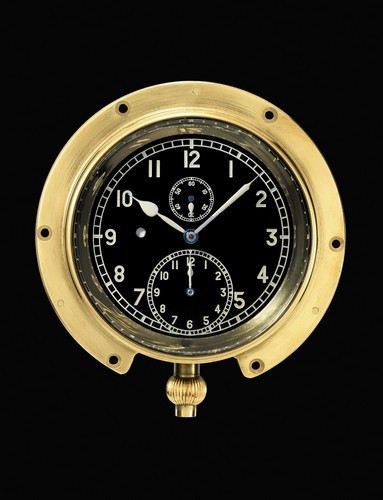
Compteur de bord
At the beginning of the 20th century, the timekeeping world was confronted with the challenge of increasing precision. Consequently, Charles-Auguste set a goal for his employees: “Make a stopwatch capable of a timekeeping precision five to ten times greater than anything that exists today.” Thus, in 1916 the Mikrograph and Microsplit were born. These were the world's first mechanical stopwatches accurate to 1/100th of a second. This revolutionary invention, which set a new benchmark for high-precision timekeeping, was the basis for the TAG Heuer pocket chronometers chosen as the official timing instruments of the Olympic Games in Antwerp (1920), Paris (1924) and Amsterdam (1928). Thousands of Mikrographs were produced over the next six decades, until its discontinuation in 1969. 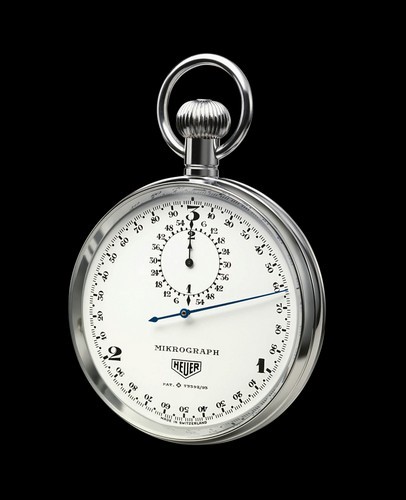
Mikrograph
The first alpine slalom and downhill ski races were timed by TAG Heuer, starting in 1928. Then, in the 1930s, TAG Heuer proved itself as the timekeeper of the speed skiing race in St. Moritz and the Bobsleigh World Championship in Caux. In 1931, Professor Auguste Piccard, a specialist of cosmic radiation, led the first stratospheric flight. To commemorate the world-record altitude of 15,781 meters, the city of Bienne gave Professor Piccard a TAG Heuer chronograph in gold. It was also because of his research in cosmic rays that Professor Piccard descended to the bottom of the sea with his bathyscaphes, in early 1945. In 1947, TAG Heuer presented him with another chronograph featuring a split-second hand with no radium, thereby not affecting the cosmic-ray measurements. Professor Piccard was used by Hergé as the model for Professor Calculus in the “Tintin” comic books. 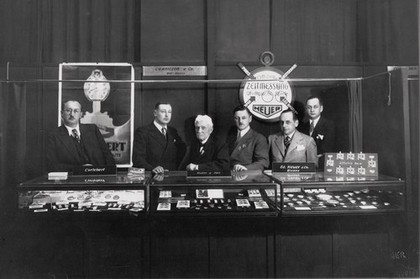
Le comptoir Heuer à la Foire de Bâle
In 1933, TAG Heuer launched the Autavia (contraction of Automobile and Aviation), the first on-board stopwatch for cars and aircraft. That same year saw the launch of the Hervue, a watch with an 8-day power reserve. These two instruments were often mounted together on a chrome base and fixed to the dashboard of a car. TAG Heuer's leading-edge chronographs soon began to be seen on the wrists of celebrity clients around the world, including Harry S. Truman, General Eisenhower, Henry Ford, Prince William of Sweden, and King Bhumibol of Thailand. 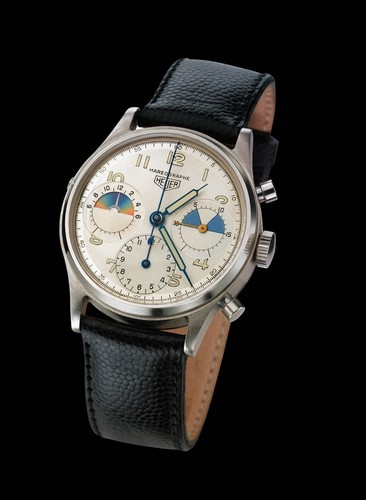
Mareographe
In 1948, TAG Heuer introduced the Auto-Graph, a wrist chronograph for air pilots with a tachymetre and an easy-to-operate counter for measuring elapsed time and fuel consumption. From racing tracks to sea-lanes, TAG Heuer continued to innovate. Since regatta timekeeping on Lake Geneva in the 1920's, sailing has inspired the company to use new materials and create new functions. Thus, in 1949, TAG Heuer unveiled its patented Mareographe, a unique sailing chronograph derived from the earlier Solunar, which had allowed fishermen to know when fish were feeding. Called the Seafarer in the USA, the new chronograph was the first with a tide indicator and 5-minute countdown function for sailing competitions. This was followed by the Yacht-Timer, a fully water-resistant chronograph whose race-start functions were controlled by a single pushbutton.
1950-70's
Accelerating research and innovation
In 1955, TAG Heuer unveiled the Twin-Time, a GMT model that simultaneously displayed two time zones. In 1958, the company presented its famous on-board timer, the Rally Master, consisting of a Master Time (8-day clock) and a Monte Carlo (12-hour stopwatch). The following year, Hubert Heuer and his nephew, Jack Heuer (son of Charles-Edouard), set up Heuer Time Corporation, a new American subsidiary based in New York. One year later, Jack Heuer unveiled a prototype of the Slalom Timer at the Basel Watch Fair. It was the company's first quartz chronograph accurate to 1/100th of a second. The electronic revolution had begun. 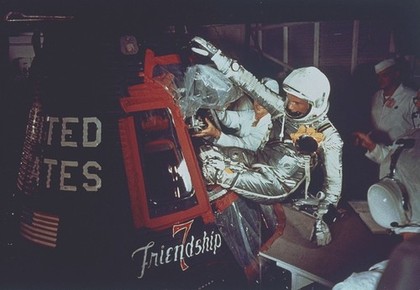
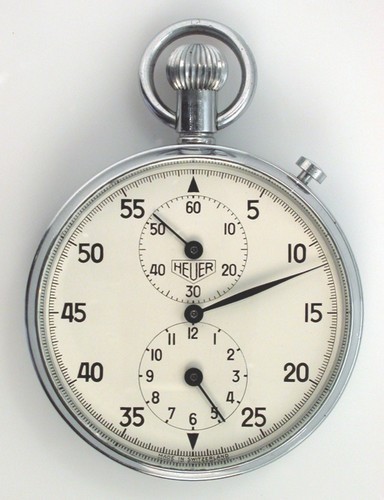
Le premier chronographe suisse dans l'espace sortait des ateliers Heuer...
CARRERA!
In 1963, Jack Heuer turned his creative focus to the world of cinema, designing the Film Master, which measured film sequences in 16mm and 35mm. The following year, he turned his attention back to his overriding passion for the sport motor racing with the inaugural launch of the legendary Carrera. A tribute to professional motor racing's most grueling road race, the legendary Mexican Carrera Panamericana of the 1950s, this stunning piece of unconventional watchmaking technology was worn by countless race drivers, and remains, in its latest incarnation, one of TAG Heuer's most popular, timeless and iconic creations. In 1966, Jack Heuer stunned the watchmaking world yet again, this time by introducing the Microtimer, the world's first miniaturized electronic timing instrument accurate to an extraordinary 1/1,000th of a second. 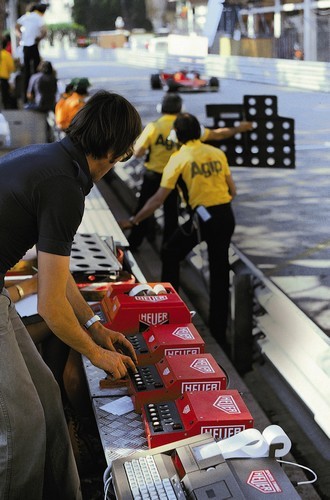 The most widely covered sports event after the World Cup and the Olympic Games is the America's Cup. TAG Heuer was the Official Supplier of chronographs to the Intrepid team, which won the America's Cup in 1967. A SQUARE WATER-RESISTANT CASE
In 1969, the Swiss driver Jo Siffert signed on as a TAG Heuer brand ambassador, becoming the first racecar driver sponsored by a watch company. 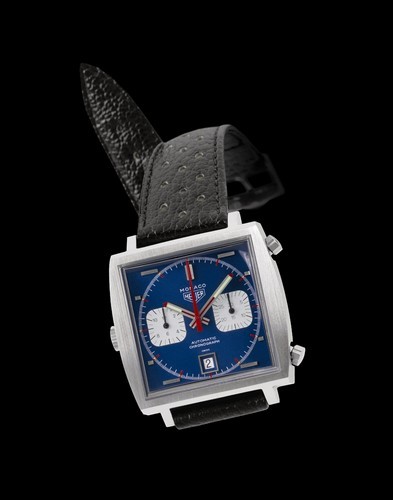
La première Monaco
That same year, the avant-garde Chronomatic Calibre 11 movement was introduced. The first chronograph movement with an automatic micro-rotor mechanism, it would power the mythic Monaco, the original automatic chronograph with a square, water-resistant case. The Monaco was immortalized on Steve McQueen's wrist in the 1970 racing film, Le Mans. 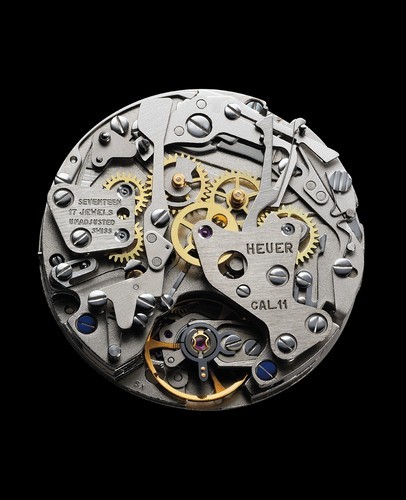
TIMING A LEGENDARY CAR In 1971, Enzo Ferrari asked Clay Regazzoni, Swiss winner of the Italian Grand Prix, to find timing instruments for Le Mans 24-Hour Race. TAG Heuer technology was ideally suited to the task, as demonstrated by the Le Mans Centigraph, which measured time to 1/1,000th of a second. 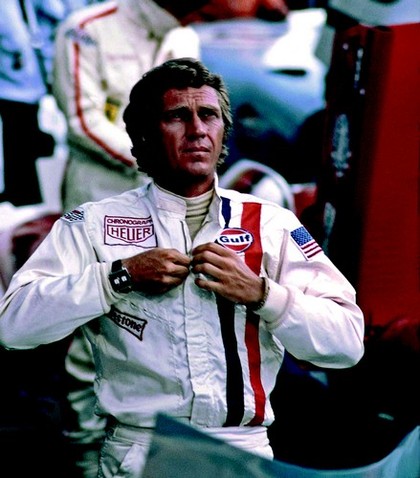
As Ferrari's Official Timekeeper from 1971 to 1979, the brand played a key role in the team's unprecedented string of world championship victories, and saw its name linked to such Ferrari legends as Gilles Villeneuve, Niki Lauda, and Jody Schekter. 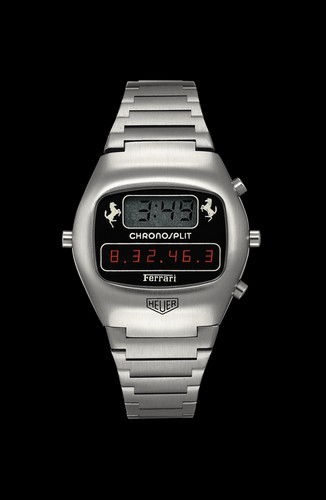 Meanwhile, in Bienne, the innovations and patents kept coming. In 1973, the Microsplit 820 was unveiled, the first pocket quartz stopwatch to be 99.999% accurate, accurate to 1/100th of a second. In 1975, TAG Heuer launched the Chronosplit, the world's first quartz wrist chronograph with a double digital display - LED and LCD. Barely two years later, the company presented the world's first digital-analog chronograph, the Manhattan Chronosplit GMT, the forerunner of the Kirium Formula 1 chronograph.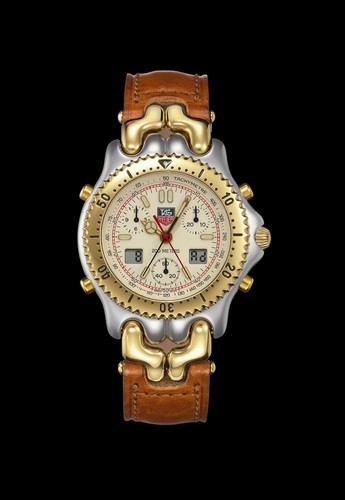
s/EL Ayrton Senna
1980-2000
Technology inspired by the avant-garde
The launch of the 2000 Series in 1982 exemplified the peerless sports spirit of TAG Heuer. This contemporary sports watch became an industry benchmark because of its essential “TAG Heuer 6 features”: water-resistant to 200 meters; unidirectional turning bezel; luminescent hands and numerals; screw-in crown with a double gasket to ensure water-resistance; double-safety clasp; and a scratch-resistant sapphire crystal glass. In 1984, Mike Birch in his Formula TAG, one of the very first Kevlar and carbon-fiber catamarans, broke the world record for the greatest distance sailed in 24 hours. In 1985, TAG Heuer teamed up with McLaren Mercedes, forming what would become one of the longest-running and most successful sponsorship partnerships in Formula One history, linking the TAG Heuer name to some of the team's most famous drivers, including Alain Prost, Ayrton Senna and Mika Hakkinen. The “S/el” (Sport and elegance) watch launched in 1987 made its mark in the world of watchmaking, thanks to its signature, a double-S shaped bracelet. This famous watch reinforced TAG Heuer's position as the industry reference for sport, elegance and prestige. In 1989, TAG Heuer became Official Timekeeper for World Cup Alpine Skiing events in the United States and Canada. In 1991, it added the Indianapolis Motor Speedway, and in 1992, the Formula One World Championship. TAG Heuer used the most advanced technologies to achieve a level of reliability that would be worthy of atomic clocks. The timing of Formula One races was controlled by a GPS satellite detection system ensuring precision to a millionth of a second. In 1999, TAG Heuer introduced the Link series, a bold reworking of the hugely successful S/el design. Inspired by the Link's double-S shaped link bracelet, five fashion designers, including Karl Lagerfeld for Leonardo and Alexander McQueen for Boris Becker, created exclusive outfits for five sporting celebrities, specially photographed by Peter Lindbergh. Already in 1995, TAG Heuer was part of Chris Dickson's challenge in the Louis Vuitton Cup, which reached the semi-finals. In 2002, the company sponsored the Oracle BMW Racing team for the America's Cup with Chris Dickson and Peter Holmberg. To commemorate the partnership, TAG Heuer offered sea racing fans a limited edition of the Link Searacer Oracle chronograph worn by team members. 
EMBLEMATIC CAMPAIGNS
Daring, prestigious, innovative: from "Don't Crack Under Pressure" to “What are you made of?” TAG Heuer advertising campaigns have always created a stir, not only in the watch industry, but also among luxury goods firms. The approach adopted is a daring act: measured and calculated. Its repercussions have a considerable impact and help to create an aura around the TAG Heuer brand. In 1991, TAG Heuer launched a new advertising campaign "Don't Crack Under Pressure", showing the intense concentration exercised by athletes which emphasizes that the approach to sport is far more mental than physical. The challenge is to push barriers to success ever further and to establish new heights of performance and standards of excellence. Success in this challenging environment is the internationally recognized reward of performance under pressure. The black and white, journalistic-style photography captures elite sports professionals fraught with pressure. The catch-line highlighted the robustness of the watch; it was water-resistant up to 200 meters. In order to track the upward movement of the brand, the campaign “Success. It's a mind game” began in 1995. Not only striking; it is also entirely original. The advertisements depict the mental pressures that athletes subject themselves to in order to win, for example a swimmer conjures up a pool full of sharks racing in the lanes behind him. In the first year of its exposure the campaign won many awards including Cannes Award International Silver Lion, ADWEEK USA Best Ad of 1995, Time Magazine USA/International 1995 Top 10 Advertisements. 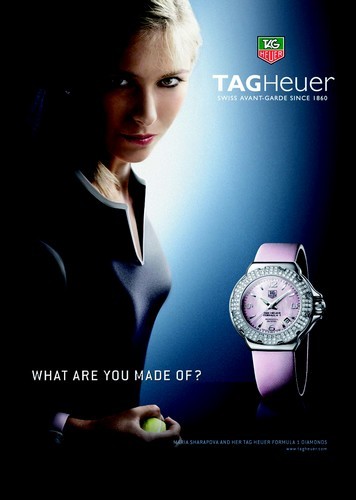
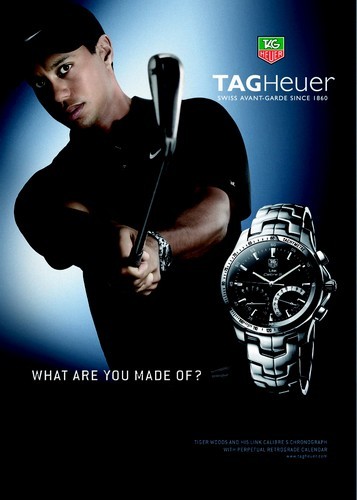 In 2002, the advertising commercial “What Are You Made Of?” communicated the brand's daring personality and made a big impression internationally. In 2003, it starred Tiger Woods, shown hitting a golf ball that flies around the Monaco Race circuit at the speed of a Formula 1 car.
2001-2003: Bringing the past to life TAG Heuer reintroduced the classic Carrera in 1996, the Monaco in 1998, and the Monza in 2000. In 2003, it was the turn of the Autavia worn in the 60s by the Swiss Formula 1 driver, Jo Siffert. These watches were revised and modernized to offer functions that met contemporary needs, yet they remained faithful to the spirit of the original pieces and the brand's unique heritage. In 2001, the avant-garde Kirium F1 represented the future direction of sports watch design and a major technical achievement: a modern analog watch with digital chronograph functions and 1/100th of a second precision. That same year, TAG Heuer became Official Timekeeper of the FIS Alpine Ski World Championships in St. Anton, Austria. Just as the “S/el”, renamed Link, introduced a new era in watchmaking, a revolution was shaking up the peaceful world of golf. His name? Tiger Woods, arguably the greatest golfer in history. A worldwide TAG Heuer Brand Ambassador since 2003, Tiger is unique, yet his motto speaks to us all: “The most important thing in life is to make yourself do better.” TAG Heuer has followed this same philosophy for almost a century and a half. The Link Calibre 36 chronometer, designed by Jack Heuer and endorsed by Tiger Woods, is a superlative example of the brand's relentless drive for perfection. In 2002, the Micrograph F1, a descendant of the legendary Mikrograph of 1916, was awarded the Design Prize at the Geneva Grand Prix d'Horlogerie. Combining the aesthetics of a prestigious watch with the functions of a high-performance professional timekeeping instrument, the Micrograph F1 features lap measuring with a precision of 1/100th of a second, and a high-end digital screen for maximum readability. That same year, the long-awaited Sportvision line of optical and sun eyewear was launched thrusting TAG Heuer's sporting prestige into an entirely new domain. The Physics range of the eyewear series received a prestigious Red Dot Design Award. 2004-2007: The revolutionary years In 2004, TAG Heuer created a sensation with the revolutionary Monaco V4 Concept Watch. Inspired by the brand's motor racing heritage (the watch's name comes from the racing engine-like V-formation of the movement's four barrels), the V4 uses ball bearings and is belt-driven. A totally new type of watch movement, it is considered the most astonishing advancement in mechanical watchmaking of the last decades, and received a Red Dot Design Award in 2005. Also in 2004, the company took on a new motor racing challenge when it became the Official Timekeeper of the Indy Racing League (IRL) and the legendary Indy 500. No other racing circuit requires such precision: 1/10,000th of a second! FROM CONCEPT TO REALITY… Another Concept Watch, the Monaco Sixty Nine, went into full production in 2004, just a year after being unveiled in Basel. The first reversible watch - one side features the Monaco dial with its mechanical hand-wound movement, the other the digital dial of the Microtimer with its 1/1,000th of a second quartz chronograph movement won the coveted Best Design Prize at the Geneva Grand Prix d'Horlogerie. For the limited edition of TAG Heuer SLR for Mercedes-Benz, TAG Heuer worked with its long-time partners, McLaren and Mercedes-Benz, creating a chronograph exclusively available to owners of the super-charged SLR sports car.
TAG HEUER: THE SPORTS AND GLAMOUR SUPERSTAR In 2005, TAG Heuer gave added depth and allure to its “Sports and Glamour” emphasis by signing tennis superstar Maria Sharapova, Hollywood legends Uma Thurman and Brad Pitt, and racing aces Juan Pablo Montoya and Kimi Räikkönen to the TAG Heuer dream team of brand ambassadors. The same year, Uma Thurman's favorite timepiece, the haute-couture Diamond Fiction, was awarded the Ladies Watch Prize at the Geneva Grand prix d'Horlogerie. 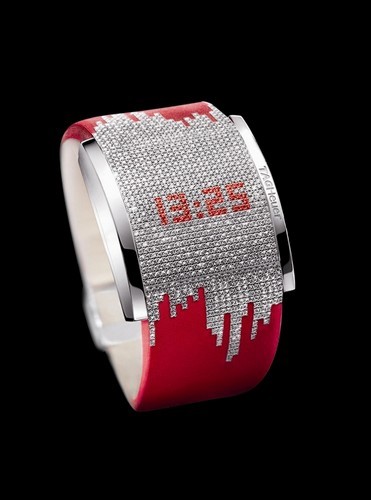 In 2005 the first-ever professional golf watch was also launched. It had been developed with the rigorous participation of Tiger Woods. It would go on to win a Chicago Athenaeum Good Design Award (2006) and a FENNIA Design Award (2007). The following year, the new TAG Heuer advertising campaign was launch. Asking “What are you made of?” the campaign strengthens the message by bringing elegance together with sport and glamour. Mental strength, the focal point of all TAG Heuer advertising, is the subject once again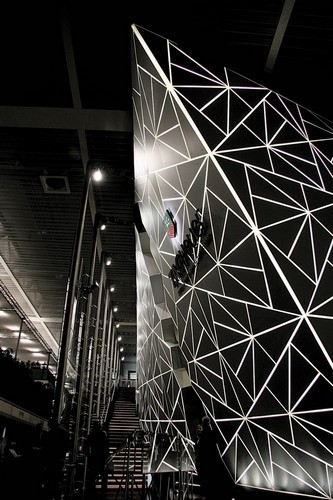
Le nouvel espace TAG Heuer à Baselworld
SAILING TOWARDS NEW ADVENTURES… In 2005, TAG Heuer also introduced the New Aquaracer Calibre S, the world's easiest-to-read and easiest-to-use electro-mechanic chronograph. To commemorate the launch, TAG Heuer signed a long-term agreement with China Team, the People's Republic of China first ever America's Cup sailing team.
FAST AND FASHIONABLE… At Baselworld 2006, the most talked about timepiece was a new TAG Heuer Concept Watch, the superlative Monaco Calibre 360 LS (Linear Second), the first chronograph with an automatic movement capable of measuring and displaying time with a precision of 1/100th of a second. Its balance oscillates at 360,000 vibrations per hour 10 times faster than any other chronograph making it the most precise chronograph ever produced.  TAG Heuer picked up a prestigious Red Dot design Award for the Calibre 360 Concept Chronograph in 2006, which had moved from the design to the manufacturing stage. Produced in a limited edition, the model in rose gold won the Sports Watch prize at the Geneva Grand Prix d'Horlogerie.
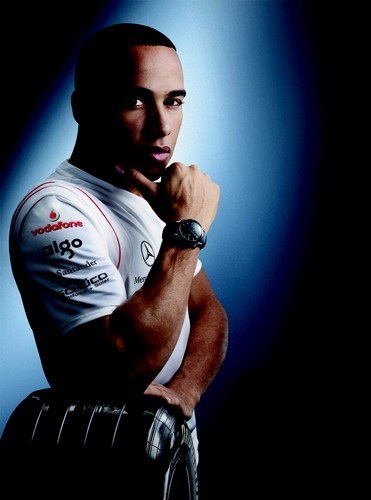
ICONIC DESIGN, ULTIMATE MOVEMENTS, TIMELESS LINK BaselWorld 2007 was the stage for the 20th anniversary celebration of the TAG Heuer Link series. To commemorate the event TAG Heuer unveiled “SKIN”, the most avant-garde booth ever built for the prestigious watch fair. It also dazzled the watchmaking world with the launch of the Link Calibre S, a new chronograph movement accurate to 1/100th of a second, combines the precision of quartz with the sophistication of mechanical functions. 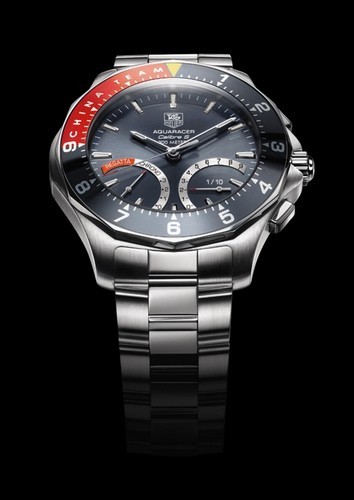 TAG Heuer also named two exciting new brand ambassadors from Formula One: the McLaren Mercedes Vodafone drivers, Fernando Alonso and Lewis Hamilton, who join fellow competitor Kimi Räikkönen, now the official driver for Scuderia Ferrari. In 20 seasons, no fewer than 7 Formula One World Championships have been won by drivers wearing TAG Heuer chronographs. Kimi Raïkkönen, the 2007 Formula One champion, is test-driving TAG Heuer's award-winning TAG Heuer Avant-Garde Eyewear line.
  TAG Heuer 360 MUSEUM in a few figures Name: TAG Heuer 360 Design lead time: 21 months Location: TAG Heuer SA
6A rue Louis-Joseph Chevrolet
2300 La Chaux-de-Fonds - Switzerland
Display space: c. 200 m² Furnishings:
- 70m² of Corian
- 70 linear metres of mirror polished stainless steel
- 50 linear metres vertical strip of glass, brushed aluminium and polished stainless steel
- 16 wall-mounted display cases with mechanical opening system
- 51 backlit cabinets (9.5 m²)
- 9 display cases on hydraulic jacks
- 300 LEDs
- 840 watts
- Raw concrete ceiling Scenographic equipment:
- 35 3X magnifying lenses
- 285 made-to-measure brackets and wall clocks
- Backlit graphic time strip 50 m long
- 97.5 m² of Optilux canvas forming a conical 360° panoramic screen
- Panoramic screen: 7.5 metres in diameter
- 12 video projectors with mirrors
- 8 32-inch LCD screens Collections & Iconography Funds:
- 300 exhibits
- 125 static images (photographs, reproductions)
- 8 themed films
- 1 panoramic film with 2 million animated images
- 180 seconds of audio tape


